





Science and Innovations in Medicine
Peer-reviewed journal of medical research and practice.
The journal was founded in 2016 and is registered with the Federal Service for the Supervision of Communications, Information Technology, and Mass Media. The Mass Media registration certificate ПИ No. ФС77-65957 was issued on June 06, 2016.
Founder and Publisher
Samara State Medical University
WEB: https://en.samsmu.ru/
Editor-in-chief
Aleksandr Kolsanov, MD, Doctor of Medical Sciences, Professor of the Russian Academy of Sciences, Professor
ORCID iD: 0000-0002-4144-7090
About
Journal Audience
The journal is intended for researchers, medical practitioners, medical professionals including those involved in allied fields of medicine, as well as students and postgraduates of medical universities.
Mission of the Journal
Mission of the Journal:
- to enhance the expertise of medical professionals;
- to promote the advancement of the medical community’s scientific potential;
- to encourage medical practitioners to develop clinical thinking.
Objectives of the Journal
- to provide authoritative coverage of current achievements in medical science;
- to introduce readers to the results of current Russian and foreign clinical and experimental studies;
- to integrate the results of Russian scientific research into the international scientific context;
- to highlight the most promising areas of medical science development;
- to assist physicians in mastering advanced technologies in the area of diagnostics, treatment, and prevention of a wide range of diseases;
- to promote the efficient incorporation of scientific research results into health care practices.
Types of Publications
- Original Study Articles
- Systematic Reviews
- Meta-analisys
- Reviews
- Clinical case reports and cae series
- Short communications
- Editorials
The editorial board reserves the right to compile thematic issues for the journal.
Journal Language
Editorial team invites and publish manuscripts with:
- metadata in Russian and/or English;
- articles full-text in Russian and/or English.
Authors, Reviewers and Editorial Board
Scientists and physicians contribute in designing the content of the journal through their manuscripts. All materials published in the journal are subject to thorough double-blined peer-review.
The publication of articles is free of charge for all authors of the journal (no APC, no ASC).
The decision to publish each article is based on the opinion of independent peer-reviewers and an assessment of its compliance with the established ethical requirements.
The international editorial board of the journal comprises of well-known Russian specialists, including full members of the Russian Academy of Sciences, as well as reputable scientists from Belarus, Germany, Denmark, Israel, Kazakhstan, USA, Uzbekistan, and France.
Publication Frequency and Distribution of the Journal
The journal is issued four times a year (quarterly) and is distributed in printed and electronic format (on the Internet).
- all articles are available online immediately after publication under the terms of open access (Platinum Open Access) with the CC BY Attribution 4.0. license.
- Print subscription is available through the catalog of the “Russian Post” agency. The journal is also distributed at specialized medical forums and exhibitions.
Indexing
- Russian Science Citation Index (eLibrary.ru) .
- Cyberleninka
- Google Scholar
- Ulrich’s Periodicals Directory
- Dimensions
- Crossref


Current Issue
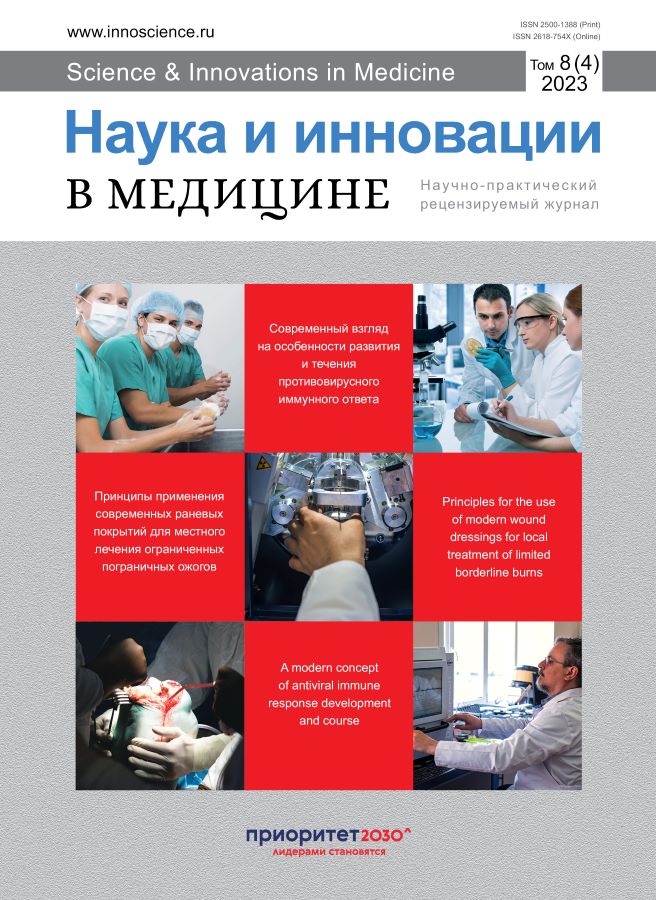
Vol 8, No 4 (2023)
- Year: 2023
- Articles: 12
- URL: https://innoscience.ru/2500-1388/issue/view/8193
- DOI: https://doi.org/10.35693/2500-1388-2023-8-4
Full Issue

Anesthesiology and resuscitation
Assessment of the psycho-emotional state of pregnant women and features of anesthesia in an obstetric hospital
Abstract
Aim – to determine the indicators of anxiety and depression in pregnant women who are going to have an operative delivery and, depending on this, to provide the optimal type of anesthesia and psychological support during the operation.
Material and methods. We examined 215 pregnant women aged 18 to 45 years (M=29,8±4,79) who were to undergo operative delivery. We also tested 188 women from the KG with the physiological course of pregnancy, with the same age and gestation period, whose delivery was carried out through the natural birth canal.
Results. In MG patients, the optimal type of PCGD was significantly lower than in CG patients (p<0.05). Euphoric, hypogestognosic and anxious types of PCGD in pregnant CG were also significantly higher than in MG patients (p<0.05). When analyzing the data on personal and situational anxiety, it was found that a high degree of severity according to the Spielberg-Khanin scale was observed in patients with anxious and depressive types of PCGD Endogenous depression in pregnant women of the main and control groups is absent when using the questionnaire for the presence and severity of depressive states I.G. Bespalko.
Conclusion. In pregnant women who were to have an operative delivery, the optimal type of PCGD was significantly lower than in women who were to have a natural birth. Anxious and depressive type of PCGD in patients with planned operative delivery was significantly higher than in patients with planned natural childbirth. Psychocorrective work and additional psychological support by an anesthesiologist-resuscitator during a caesarean section reduced the severity of anxiety and depressive disorders.
 228-232


Gerontology and geriatrics
Are thyroid hormone levels and sarcopenia in elderly patients associated with type 2 diabetes mellitus and euthyroidism?
Abstract
Aim – to study the relationship between thyroid function parameters (free T3 (FT3), free T4 (FT4), FT3/FT4 ratio), thyroid-stimulating hormone (TSH) and parameters characterizing sarcopenia (muscle mass and strength, physical performance) in patients with type 2 diabetes mellitus (T2DM) and euthyroidism.
Material and methods. The study included 312 elderly patients with T2DM in a state of euthyroidism (mean age 65.39 ± 2.28 years). In all participants the following parameters were measured: anthropometric parameters, thyroid hormones (FT3, FT4), TSH, fasting blood glucose, glycated hemoglobin (HbA1c), fasting C-peptide and insulin, lipid profile, body composition, handgrip strength, walking speed.
Results. Sarcopenia was prevalent in 26.9% of T2DM patients with euthyroidism. A binary logistic regression analysis adjusted for age, gender, smoking and alcohol consumption, T2DM duration, hypertension, HbA1c level, eGFR, TG, HDL and fat mass fraction showed that the high-normal FT3 level (OR = 0.522, 95% CI: 0.304–0.895, p = 0.018), a low-normal FT4 level (OR = 1.126, 95% CI: 1.009–1.258, p = 0.034) and an increased FT3/FT4 ratio (OR = 0.923, 95% CI: 0.879–0.969, p = 0.001) were associated with a low prevalence of sarcopenia. FT3 concentration was positively associated with muscle strength (OR = 0.525, 95% CI: 0.305–0.902, p = 0.020) and walking speed (OR = 0.443, 95% CI: 0.259–0.758, p = 0.003), while FT4 concentration was negatively associated with muscle mass (OR = 1.114, 95% CI: 1.009–1.232, p = 0.036). The FT3/FT4 ratio was positively associated with muscle mass (OR = 0.943, 95% CI: 0.905–0.981, p = 0.006), muscle strength (OR = 0.945, 95% CI: 0.901–0.992, p = 0.021), and walking speed (OR = 0.934, 95% CI: 0.894–0.975, p = 0.002). TSH levels were not associated with sarcopenia.
Conclusion. The high FT3/FT4 ratio is significantly associated with a low risk of sarcopenia in T2DM patients with euthyroidism.
233-238
Infectious diseases
Modern view on the features of the development and course of the antiviral immune response
Abstract
The review article summarizes recent literature data on immunopathogenetic features that influence the nature of the development and course of viral infections.
According to the impact on a cell, cytopathic and non-cytopathic viruses are isolated. The course of viral infections is accompanied by cell death, immunopathology, immunosuppression, oncogenesis, and in later stages – molecular mimicry and immune amnesia. The acute course of infections is controlled mainly by the mechanisms of innate immunity. The severity of the course of such infections is associated with the genetic variability of viruses and resistance to the antibodies' neutralizing effects. Viruses that are non-cytopathic in their natural mouse hosts can cause acute and chronic infections in humans. The activity of viral reproduction, the persistent infection may be associated with the peculiarities of the expression of gene profiles of the infected cell. The synthesis of endogenous interferons can also affect the nature of the infection development. Disturbances in signaling through Toll-like receptors may contribute to the persistence of infection. Some of the viral proteins block the presentation by the molecules of the main histocompatibility complex of I, II class of viral antigens, interfering with various stages of the presentation. This process is facilitated by a decrease in the transcription of genes of the main histocompatibility complex, blocking the secretion of immunogenic peptides by the proteasome or interfering with the subsequent assembly and transport of the peptide complex to the cell surface. A number of viral proteins stimulate the virus reproduction and inhibit apoptosis. It is believed that the B7-2 molecule is most important for triggering the immune response. Immunodominant epitopes of viral antigens, mutants of cytotoxic lymphocytes are key factors in the immunopathogenesis of persistent, latent infections. Changes in the viral genome of even a single amino acid allow them to avoid recognizing epitopes by an activated T-lymphocyte. Another mechanism for viruses to escape the immune system control is the death of activated T-cells.
239-250
Cardiology
Methods for measuring respiratory rate based on the analysis of chest wall movements
Abstract
Aim of the review – to discuss the respiratory rate (RR) measurement methods that use sensors for analyzing chest wall movements. Strain and movement sensors can be successfully used in real clinical practice, since they can be easily integrated into clothes and garments (electronic textiles) for measuring the respiratory rate in both inpatients and outpatients. Meanwhile, magnetometers, gyroscopes and accelerometers must be located in specific places. One of the main limitations of strain and motion sensors is their sensitivity to patient's breathing-unrelated movements. In order to reduce this limitation, the sensors should most often be placed in the upper part of the chest and integrated into mechanical supports. In addition, it is recommended to use hybrid systems consisting of multiple different sensors. Such systems allow separate analysis of the thoracic and abdominal breathing patterns, providing for wide opportunities to use these sensors for scientific purposes. The use of special polymers and protective materials in a piezoresistive sensors design will allow to overcome their other drawback – the possible influence of environmental factors (for example, temperature or humidity).
Conclusion. All types of the sensors presented in this review showed generally good quality of respiratory curves at rest during normal breathing. However, in most cases, the bias increased in physical activity. The choice of a certain type of sensor for RR assessment should obviously be based on the specific clinical situation, monitoring duration, monitoring conditions (intensive care unit, inpatient, outpatient department), taking into consideration the advantages and disadvantages.
251-258
Left ventricular remodeling in perimenopausal women
Abstract
Aim – to reveal specific features of the left ventricle (LV) structural and functional state and the pro-inflammatory status indicators in women of perimenopausal age.
Material and methods. The cross-sectional study included 80 women (age 45 to 55 years) who were divided into 2 groups: a menopausal transition group and an early postmenopausal group according to the STRAW + 10 classification. Anthropometric measurements were taken; blood tests for homocysteine C, interleukin-6 (IL6), C-reactive protein (CRP), and echocardiography were performed according to the standard technique.
Results. The study findings were as follows: 1. women in early postmenopause had higher levels of CRP when compared with women in the menopausal transition (4.5 (1.5; 8.0) mg/l versus 2.5 (0.6; 7.4) mg/l), in obese women, the level of IL6 was higher than in normal-weight women regardless of menopausal status (1.8 (0.6; 2.8) pg/ml versus 0.6 (0.2; 1.3) pg/ml); 2. the distribution of participants according to the type of myocardial remodeling did not differ in the comparison groups; 3. the presence of arterial hypertension and menopause was associated with myocardial hypertrophy; 4. significant differences were found in the distribution of myocardial geometry in women with obesity and overweight when compared to women with a normal body mass index (BMI) regardless of menopausal status; 5. significant direct correlation was registered between the structural and volume parameters of the LV and age, blood pressure, BMI, waist to hips circumference ratio. A positive correlation was found between the level of pro-inflammatory biomarkers and structural parameters of LV.
Conclusion. In women of perimenopausal age, a myocardial remodeling was revealed that could not be explained by traditional risk factors. The activation of the systemic inflammatory response in menopause and obesity was accompanied by the pathological LV remodeling and myocardial hypertrophy.
259-265
Cell biology
Features of reparative myogenesis of the internal anal sphincter locally exposed to humic acids
Abstract
Aim – to evaluate the effect of local exposure to humic substances on the repair of smooth muscle tissue of the internal anal sphincter.
Material and methods. Laboratory male rats were subjects for experimental study. The tissues were studied using light-electron microscopy and immunocytochemistry.
Results. The study revealed the features of myocyte survival in the wound and near-wound zones, the connective tissue scar formation rate. The phenomenon of the transformation of contractile myocytes into contractile-secretory ones was confirmed. The experiment has registered several features of the compensatory processes occurring with the use of humic acids as a local therapeutic agent. Specifically, the presence of a more pronounced edema of the interstitium, prolongation in time, in comparison with the control, filling the interstitium with connective tissue, as a result of which the architectonics of collagen fibers was adequate to the direction of myocyte contraction and relaxation. In addition, mitotically dividing cells were found among the muscle layer of the wound zone in the experimental group.
Conclusion. The experimental data suggests that humic acids, being a natural factor, can contribute to the processes of intracellular and cellular regeneration, resulting in better restoration of the internal sphincter structure. Further development of humic substances along with the research on their action at the cellular and tissue levels should be encouraged.
266-270
Public health, organization and sociology of health
A population study of paracardial fat as a risk factor for cardiovascular diseases (based on the data of the Moscow experiment on the use of computer vision in radiodiagnosis)
Abstract
Aim – to study the prevalence of paracardial fat as a risk factor for cardiovascular diseases in Moscow population using an automated analysis of the results of radiological examinations.
Material and methods. The research was designed as descriptive, retrospective epidemiological study. The results of chest computed tomography of 113,408 patients served as the study data. The data was analyzed by AI services in an automated mode for the presence of paracardial fat and calculation of its volume.
Results. The paracardial fat was detected in 66.5% of the examined persons. The proportion of men was 45.7%, women – 54.3% (p<0.001). The volume of paracardial fat fluctuated in the range from 1.0 to 1517.0 ml; the average value was 282.1 ml. The average volume of paracardial fat in men (326.0 ml) was significantly larger than in women (244.7 ml) in each age group. The clinically significant volume of paracardial fat (≥200 ml) was detected in 33,081 individuals (in 64.0% of people having this risk factor). The risk factor was clinically significant in 71.1% of men and in 57.9% of women (p<0.001).
Conclusion. The prevalence of paracardial fat in Moscow population was 5.97 per 1000 individuals. A clinically significant volume of paracardial fat was most often found in both sexes in the elderly (78.7%) and senile age groups (78.2%). Each 5 years of age increased the probability of this risk factor incidence by 1.282 times in general; and the risk of developing its clinical form – by 2.981 times in particular.
271-280
Digital personnel records as an element of human resources management in healthcare
Abstract
Aim of the review – to analyze existing software for personnel management, to introduce a design of a unified digital database of healthcare specialists integrated with the platform of the Unified State Information System in Healthcare (USISH). The creation of digital personnel records on the existing information platform, integration with other state IT-systems will not only systematize and accumulate data on healthcare specialists, but also serve as a tool for personnel policy implementation both at the level of a medical organization and the level of a region, federal district and whole country.
281-286
The Federal Project "Fighting Cardiovascular Diseases": Dynamics of quantitative indices during the COVID-19 pandemic
Abstract
Aim – to analyze the dynamics of indicators of the Federal Project "Fighting Cardiovascular Diseases" and to suggest improving the project management methods in healthcare.
Material and methods. The data was collected from Federal statistical observation form No. 14 "Data on activity of divisions of the medical organizations providing in-hospital medical care", form No. 30 "Data on the medical organization". The target indicators were selected from the Passport of Federal Project "Fighting Cardiovascular Diseases". The data on mortality rate was collected from the Rosstat reports on the number of population and the number of deaths by different diseases.
Results. In Russia, the frequency of endovascular interventions in acute coronary syndrome is growing essentially exceeding the target values of the Federal Project. Several regions are leading in the intensity of performing these operations (taking into account the population size) leaving behind many developed countries. At the same time, the death rate from cardiovascular diseases in Russia remains one of the highest in the world. The problem of medical care quality is still acute. The in-hospital lethality rates from cerebrovascular accident and acute myocardial infarction have significantly exceeded the target values during the entire period of observation.
Conclusion. During the infectious pandemics, the actions and target indicators of federal projects in healthcare should be revised. The healthcare model focusing on disease prevention, conservative treatment and telemedicine is preferable.
287-293
Traumatology and Orthopedics
Effectiveness of ESIN osteosynthesis in pediatric forearm diaphyseal fractures: A retrospective analysis
Abstract
Aim – to retrospectively evaluate the treatment results in children with diaphyseal forearm fractures operated on using intramedullary metal osteosynthesis with titanium elastic rods according to the Elastic Stable Intramedullary Nailing (ESIN) method.
Material and methods. The treatment results of 79 children were included in the retrospective analysis. The patients' mean age was 11.8 years (from 6 to16 years).
Results. The results of treatment were evaluated using the classification of Anderson et al. [20] in the early postoperative period, at 2, 4 and 6 months after surgery.
Conclusion. The ESIN osteosynthesis for diaphyseal fractures of the forearm bones in children allows for achieving excellent treatment results and early limb functionality in the absolute majority of cases.
294-299
Surgery
Enteral insufficiency in different phases of acute pancreatitis
Abstract
Aim – to study the integral scale for assessing enteral insufficiency in patients with acute pancreatitis during the phases of enzyme toxemia and purulent-destructive complications; to develop a strategy for choosing a method for enteral insufficiency correction.
Material and methods. We have analyzed the treatment outcomes in 232 patients with acute pancreatitis admitted to the surgical department of the Samara Regional Clinical Hospital n. a. V.D. Seredavin for the period from 2013 to 2019. Two study groups were formed: retrospective and prospective. The retrospective (control) group included 175 patients whose treatment outcomes were assessed retrospectively for the parameters of the enteral insufficiency syndrome and measures were suggested for its differentiated correction. The prospective (intervention) group included 57 patients who were treated using the developed principles of enteral insufficiency correction.
Results. The occurrence of I and II degrees of enteral insufficiency differed significantly depending on the phase of acute pancreatitis. When using complex correction of enteral insufficiency according to the proposed scheme, in patients in the phase of enzyme toxemia the I degree enteral insufficiency was prevalent, the patients in the purulent-destructive phase were more likely to have II degree enteral insufficiency.
Conclusion. The timely inclusion of enteral insufficiency correction into the complex of therapeutic measures for pancreatitis may improve the treatment outcome in patients with moderate and severe phases of acute pancreatitis.
300-306
Principles for the use of modern wound dressings for local treatment of limited borderline burns
Abstract
Aim of the review – to analyze the principles of the use of wound dressings for limited borderline burns.
We have made an attempt to systematize the use of wound dressings depending on the state of the wound surface, the stage of the wound process. The proposed system simplifies the selection of the dressing and increases the chance for optimal treatment leading to positive clinical results.
307-312
 СМИ зарегистрировано Федеральной службой по надзору в сфере связи, информационных технологий и массовых коммуникаций (Роскомнадзор).
 Регистрационный номер и дата принятия решения о регистрации СМИ: серия ПИ № ФС77-65957 от 06 июня 2016 г.