



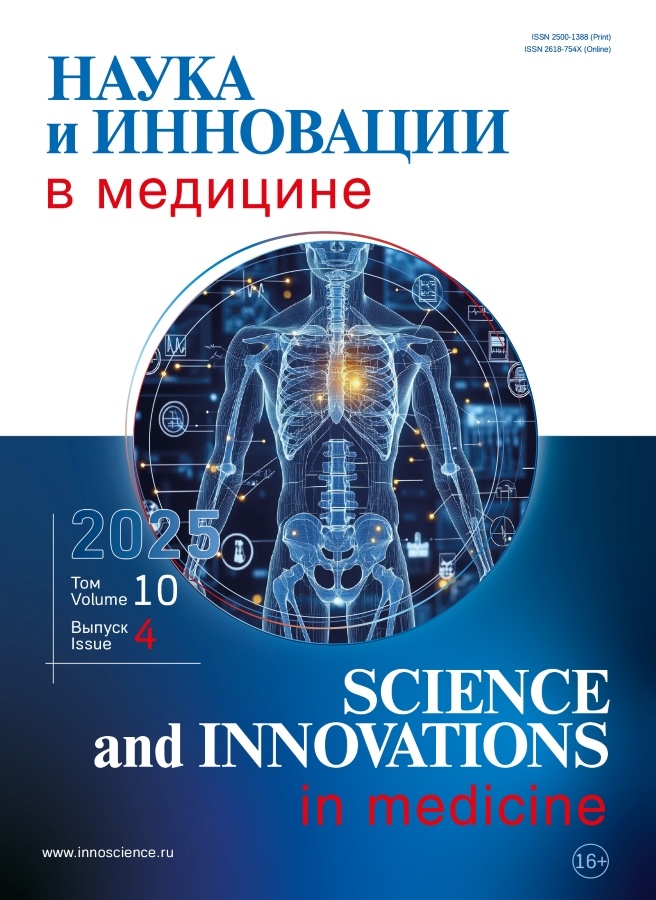
Science and Innovations in Medicine
Peer-reviewed journal of medical research and practice founded in 2016.
Founder and Publisher
Samara State Medical University
WEB: https://en.samsmu.ru/
Editor-in-chief
Aleksandr Kolsanov, MD, Doctor of Medical Sciences, Corresponding Member of the Russian Academy of Sciences, Professor
ORCID iD: 0000-0002-4144-7090
About
Journal Audience
The journal is intended for researchers, medical practitioners, medical professionals including those involved in allied fields of medicine, as well as students and postgraduates of medical universities.
Mission of the Journal
Mission of the Journal:
- to enhance the expertise of medical professionals;
- to promote the advancement of the medical community’s scientific potential;
- to encourage medical practitioners to develop clinical thinking.
Objectives of the Journal
- to provide authoritative coverage of current achievements in medical science;
- to introduce readers to the results of current Russian and foreign clinical and experimental studies;
- to integrate the results of Russian scientific research into the international scientific context;
- to highlight the most promising areas of medical science development;
- to assist physicians in mastering advanced technologies in the area of diagnostics, treatment, and prevention of a wide range of diseases;
- to promote the efficient incorporation of scientific research results into health care practices.
Types of Publications
- Original Study Articles
- Systematic Reviews
- Meta-analisys
- Reviews
- Clinical case reports and cae series
- Short communications
- Editorials
The editorial board reserves the right to compile thematic issues for the journal.
Journal Language
The journal invites manuscripts in Russian and/or English. Accepted articles publish:
- with metadata in both Russian and English;
- with full-text in Russian and/or English (depending on the language of the manuscript and the authors' wishes).
Authors, Reviewers and Editorial Board
Scientists and physicians contribute in designing the content of the journal through their manuscripts. All materials published in the journal are subject to thorough double-blined peer-review.
The publication of articles is free of charge for all authors of the journal (no APC, no ASC).
The decision to publish each article is based on the opinion of independent peer-reviewers and an assessment of its compliance with the established ethical requirements.
The international editorial board of the journal comprises of well-known Russian specialists, including full members of the Russian Academy of Sciences, as well as reputable scientists from Belarus, Germany, Denmark, Israel, Kazakhstan, USA, Uzbekistan, and France.
Publication Frequency and Distribution of the Journal
The journal is issued four times a year (quarterly) and is distributed in printed and electronic format (on the Internet).
- all articles are available online immediately after publication under the terms of open access (Platinum Open Access) with the CC BY Attribution 4.0. license.
- Print subscription is available through the catalog of the “Russian Post” agency. The journal is also distributed at specialized medical forums and exhibitions.
Indexing
- Russian Science Citation Index (eLibrary.ru)
- DOAJ
- Cyberleninka
- Google Scholar
- Ulrich’s Periodicals Directory
- Dimensions
- Crossref
The journal is registered with the Federal Service for the Supervision of Communications, Information Technology, and Mass Media (Russian Federation). The Mass Media registration certificate ПИ No. ФС77-65957 was issued on June 06, 2016.


Current Issue
Vol 10, No 4 (2025)
- Year: 2025
- Published: 10.11.2025
- Articles: 12
- URL: https://innoscience.ru/2500-1388/issue/view/14321
- DOI: https://doi.org/10.35693/SIM-2025-10-4
Full Issue

Human Anatomy
Myocardial bridges and proximal atherosclerosis of the coronary arteries: pathogenetic interrelation and clinical significance
Abstract
Myocardial bridges (MB) are a congenital anomaly in which the coronary artery is partially immersed in the myocardium. The prevalence of MB varies from 0.5% to 87%, depending on the diagnostic method: selective angiography detects 0.5-18% of cases, whereas CT angiography, up to 73%.
An analysis of 22 peer-reviewed papers (1986-2023) showed that in 98% of the cases MB is associated with proximal atherosclerosis due to hemodynamic disorders (turbulent blood flow, high pressure gradient). However, some studies deny a direct link or point to the potential protective effect of MB. Systolic compression of the artery causes myocardial ischemia, especially in cases of left ventricular hypertrophy or microvascular dysfunction. Clinical manifestations range from asymptomatic to angina pectoris, ACS, and sudden death. Treatment includes beta-blockers, stenting, and myotomy, but the lack of randomized trials limits universal recommendations. The contradictions in the data emphasize the need to integrate morphological and functional imaging, as well as to personalize therapy. Long-term cohort studies, risk stratification algorithms using AI, study of the angular anatomy of coronary arteries may be prospective lines of further research.
 262-268


Dynamics of morphotopometric characteristics and X-ray density of TVI vertebra in men from the first period of mature age to old age
Abstract
Aim – to evaluate the dynamics of anteroposterior dimensions and X-ray density of the TVI vertebra in men from the first period of adulthood to old age according to computed tomography (CT) of the chest.
Material and methods. The work is based on the results of CT scans of patients undergoing chest examinations. The height, width, anterioposterior dimension, and X-ray density of the TVI vertebra body were measured. The study sample consisted of individuals with normal body weight, mesomorphic body type, without history of injuries and skeletal abnormalities. 60 patients were randomly selected from 78 subjects, so that each group had the same number of patients: 20 people. The first group consisted of men of the first period of adulthood (22-35 years of age), the second group included men of the second period of adulthood (36-60 years of age), the third group consisted of elderly men (61-75 years of age).
Results. The study revealed a tendency for the TVI vertebral body height parameters to decrease by 7.8% in old age (t = 2.01; p > 0.05). A tendency for the TVI vertebral body width parameters to increase by 2.18% in old age (t = 0.54; p > 0.05) was revealed. At the same time, a tendency for the anteroposterior size parameters of the TVI vertebral body to increase by 2.25% was determined (t = 0.60; p > 0.05). The X-ray density indices of the TVI vertebral body are characterized by a significant decrease in parameters with increasing age (p < 0.001).
Conclusion. As a result of the conducted intravital study, new data on the age-related anatomy of the TVI vertebra in men were obtained. Since the anatomical parameters of the vertebra are not static values and change with age, this information will useful in clinical practice of such specialists as gerontologists, traumatologists, vertebrologists, radiation diagnosticians, in sports medicine and in the work of exercise therapy doctors.
269-273
Gerontology and geriatrics
The relationship between the level of Nt-proBNP and indicators of clinical and metabolic status in comorbid elderly patients with type 2 diabetes mellitus
Abstract
Aim – to determine the specific features of the use of the semi-quantitative Nt-proBNP immunochromatographic assessment technique for the diagnosis of chronic heart failure (CHF) in comorbid elderly patients with type 2 diabetes mellitus (DM2) in relation to indicators of clinical and metabolic status.
Material and methods. The study was performed using a cross-sectional design; 97 clinical and laboratory-instrumental indicators were studied, including the determination of Nt-proBNP by a semi-quantitative method, in a sample of 50 comorbid elderly patients with T2DM; groups were identified according to the threshold value of Nt-proBNP 450 pg/ml; the interrelationships and significance of differences in variables in the groups were analyzed, including the number of average values of biomarkers for achieving the goals of DM2 treatment and the structure of drug therapy.
Results. A high prevalence of comorbid pathology (arterial hypertension: 90%, obesity: 74%, dyslipidemia: 72%) and a high proportion of participants’ failure to achieve therapeutic goals, comparable in the Nt-proBNP groups, were revealed; a significant association between the Nt-proBNP group and the previously established stage of CHF (χ2 = 6.4; p = 0.041), a positive correlation with the ratio of transmittal blood flow rates in early and late diastole E/A (r = 0.309; p = 0.003); Indirect evidence has been obtained for the high sensitivity of the semi-quantitative assessment of Nt-proBNP for the diagnosis of early-stage CHF.
Conclusion. The majority of comorbid elderly patients with DM2 (72%) have Nt-proBNP levels above the general population threshold of 125 pg/ml and need to verify the diagnosis of CHF. The assessment of the Nt-proBNP test result in T2DM has its own specifics due to polymorbid pathology (obesity and CKD) and the presence of multidirectional “disturbing” factors. When planning a follow-up program for elderly patients with DM2 and hypertension, the indications for Nt-proBNP screening should be taken into account, and if the result is positive, for an in-depth Echocardiography examination.
274-282
Cardiology
Role of the plasma level of plasminogen activator inhibitor type-1 (PAI-1) and genetic polymorphism of PAI-1 gene in patients with ischemic heart disease in Uzbek population
Abstract
Aim – to study the distribution of allele frequencies of the polymorphic marker 4G(-675)5G of the PAI-1 gene among patients with coronary heart disease and individuals with risk factors for the development of coronary heart disease.
Material and methods. The study included 63 patients with diagnosed coronary heart disease, especially with stable angina (48 men and 15 women) hospitalized in the 1st Cardiology Department of the Multidisciplinary Clinic of the Tashkent Medical Academy. The average age of patients was 56.8 ± 6.40 years (42-66 years old). The state of hypercoagulability was assessed by measures of polymorphism gene of PAI-1 and plasma level of PAI-1.
Results. The assessment of the frequency of various variants of the 4G(-675)5G polymorphic marker of the PAI-1 gene showed that differences in the distribution of the 5G/5G, 4G/5G, 4G/4G genotypes depending on the functional class of coronary artery disease are not statistically significant, since the chi-square test value was χ2 = 1.85 (p > 0.05). Based on the obtained results, it can be assumed that the presence of hetero- and homozygous variants of the 4G allele of the PAI-1 gene does not affect the severity of the disease, in particular, the functional class of stable angina.
Conclusion. The 4G/5G polymorphism of the PAI-1 gene was significantly associated with the risk of coronary heart disease in the Uzbek population. When stratified by angina functional class, the results showed that the 4G/5G polymorphism is associated with an increased risk of coronary heart disease and higher plasma PAI-1 levels.
283-289
Gender and age effects on coronary calcium index in patients with suspected CHD
Abstract
Aim – to assess the influence of sex and age on the coronary artery calcium (CAC) score in patients with suspected coronary heart disease (CHD).
Material and methods. A prospective, observational, single-center study was conducted. The study included 733 patients (mean age 67 [58; 73] years, 43.37% male) with suspected CHD who underwent multi-slice computed tomography (MSCT) of the coronary arteries with CAC scoring (using the Agatston method), as well as a biochemical blood test assessing lipid profile, glucose level, creatinine level, and estimated glomerular filtration rate (eGFR). An analysis of baseline clinical and laboratory parameters and the distribution of CAC scores according to patient age and sex was performed. Statistical analysis was performed using SPSS Statistics 21.0, employing the Shapiro-Wilk test, Student’s t-test, and ANOVA.
Results. It was found that CAC scores increased with advancing age, and men had significantly higher CAC scores than women of the same age category. In the group of patients with higher CAC scores, older men were more prevalent, and there were higher creatinine levels and a higher incidence of atrial fibrillation. The correlation analysis revealed moderate and strong associations between CAC scores and parameters of lipid metabolism, as well as eGFR.
Conclusion. The assessment of CAC scores, taking into account sex and age, improves the accuracy of cardiovascular risk stratification in patients with suspected CHD. The implementation of this approach into clinical practice helps optimize preventive and therapeutic strategies for reducing cardiovascular morbidity and mortality.
290-296
Neurology
Diagnostic potential for detecting upper limb arthropathy in ischemic stroke patients with RRS score of 4–6 points
Abstract
Aim – to identify the features of the formation of upper limb arthropathy in patients with ischemic stroke with 4-6 points on the rehabilitation routing scale (RRS) depending on the type of treatment and rehabilitation procedures.
Material and methods. Ninety-eight patients with ischemic stroke were examined in two periods: Period 1, 13.2 ± 0.8 days and Period 2, 189.2 ± 2.1 days. Ultrasound and X-ray examinations were performed to determine the nature of damage to the joint complex of the upper limb. The severity of the neurosomatic status was assessed using the NIHSS, MRS, MMSE, VAS, and RRS scales.
Results. Post-stroke hemiparesis in the acute period of ischemic stroke was registered in 86 patients (88%), and upper limb arthropathy in 36 (37%) of the examined patients. In 12 (32%) patients with ischemic stroke the arthropathy of the shoulder joint combined with damage to other joints. In the majority of patients with ischemic stroke with arthropathy, according to the ultrasound data of the joints, synovitis was detected in 27 (76%), and tendon tendinitis in 17 (47%) that form the structure of the shoulder joint. In dynamics, contracture of the upper limb was revealed in 12 (26%) of the examined and was combined with a more pronounced cognitive defect, which required development of preventive and corrective methods.
Conclusion. It is proposed to introduce into the diagnostic standard of patients with ischemic stroke with paresis of 0-3 points ultrasound of the affected joint to identify early markers of arthropathy in order to promptly prevent contracture of the upper limb.
297-301
Mild cognitive impairments in patients in the acute period of cardioembolic stroke
Abstract
Aim – to study the features of moderate cognitive disorders in patients with acute ischemic stroke of the cardioembolic subtype during comprehensive neuropsychological testing in comparison with data on structural changes in brain tissue identified using visual semi-quantitative scales during magnetic resonance imaging of the brain.
Material and methods. The prospective observational study involved 60 patients (22 women and 38 men) diagnosed with cardioembolic stroke. The study participants were divided into two groups: patients with non-amnesic (neurodynamic) multifunctional type of moderate cognitive disorders (40 patients: 70% men, 30% women, mean age 64.3 years) and patients with amnestic multifunctional type (20 patients: 50% men, 50% women, mean age 76.1 years). All patients underwent a comprehensive neuropsychological examination and magnetic resonance imaging of the brain using standard magnetic resonance scales.
Results. Patients with non-amnestic multifunctional type of moderate cognitive disorders accounted for 67% of the examined patients (40 people), and 33% (20 people) were patients with amnestic multifunctional type. During the examination, neuropsychological features were identified in each group. 22% of patients (13 people) had infarctions in the “strategic” zones, and 45% of patients (27 people) had multiple focal ischemic strokes. In 90% of patients (54 people), there was a pronounced lesion of the white matter in the form of a hyper-intense signal from the periventricular and subcortical areas and a moderate widening of the cerebral sulci against the background of slight atrophy of the gyri.
Conclusion. The comprehensive diagnostic approach, including neuropsychological testing and assessment of structural changes in the brain using visual semi-quantitative magnetic resonance scales, allows for the detection of cognitive impairments at the pre-dementia stage and the initiation of therapy aimed at preventing the progression of these impairments.
302-309
Oncology and radiotherapy
Possibilities of surgical treatment of pancreatic head neuroendocrine neoplasms with major venous invasion
Abstract
Aim – to demonstrate the feasibility and relative safety of resection of the portal and/or superior mesenteric veins invaded by tumor during surgical treatment of the neuroendocrine neoplasm of the pancreatic head, as well as the feasibility of simultaneous resection of the liver for resectable metastases in patients with stage IV disease during primary surgery and at disease progression of any stage following surgical treatment.
Material and methods. Surgical treatment of 16 patients with neuroendocrine neoplasm of the pancreatic head with invasion of the superior mesenteric and/or portal veins of stages III-IV of high and moderate differentiation (G1 and G2) included a standard gastropancreoduodenal resection in 87.5% cases, extended gastropancreoduodenal resection with aortocaval lymph node dissection in 6.25% cases, and pancreatectomy in 6.25% cases. During the standard operation, in one female patient (6.25%) segmental resection of the liver was performed to remove the metastasis. The rate of portal vein resection was 6.25%, superior mesenteric vein, 50%, both major veins, 43.8%. Neoadjuvant treatment was not administered, while adjuvant XELOX treatment was administered to 3 (18.8%) patients. The statistic processing of the study results was performed in Statistica for Windows v.10 and SPSS v21. The obtained differences were deemed statistically significant at р≤0.05 (≥95% accuracy). In order to calculate the survival rate, the Kaplan-Meier method was used with log-rank test evaluation of significance of differences.
Results. The rate of R0 surgical treatment was 93.8%, the rate of complications of surgical treatment of Clavien-Dindo class III and above was 43.8% with the total rate of all complications of 75%. The main complications included gastric stasis (50.1%), arrosive hemorrhage (18.8%), acute gastrointestinal ulcer hemorrhage (18.8%), pneumonia (18.8%). The rate of postoperative thrombosis of the portal and/or superior mesenteric vein was 12.5%, leakage of the pancreato-digestive anastomosis was 12.5%, leakage of the bilio-digestive anastomosis, 6.3%, pancreatic fistula, 12.5%. Relaparotomy was performed in 2 (12.5%) patients who later died due to complications of surgical treatment (leakage of the pancreato-digestive anastomosis with arrosive hemorrhage). Disease progression was seen in 10 (62.5%) of the patients within 3 to 69.3 months, the median time before identification of progression being 39.7 [7.1; 52.8] months, and mortality from progression being 50%. Local recurrence developed in 12.5% patients, metastases in the retroperitoneal lymph nodes in 6.25%, metastases in the liver in 43.75%, in two cases, liver resection due to metastases was performed. In cases of progression, all patients received antineoplastic therapy with analogs of prolonged somatostatin. The median overall survival was 70.1 months, progression-free survival, 49.2 months, one-year survival was 81.2% and 78.6%, respectively, three-year survival, 68.2% and 63.5%, five-year, 68.2% and 36.3%, ten-year, 20.55% and 18.1%.
Conclusion. The outcomes of surgical treatment of patients with neuroendocrine neoplasm of the pancreatic head with invasion of the portal and/or superior mesenteric vein show the feasibility, relative safety and efficiency of resection of these major veins. In the majority of patients, surgical treatment may be performed in the radical volume and extended by liver resection in the event of resectable metastases. Considering the relatively favorable prognosis of the disease, liver resection for resectable metastases and disease progression may be performed: it is safe, it improves quality of life of patients, and extends the period without tumor manifestations.
310-314
Quality of life assessment in patients with prostate cancer using the FACT-P questionnaire: linguistic and cultural adaptation of the Russian version
Abstract
Aim – to perform linguistic and cultural adaptation of the international FACT-P (Functional Assessment of Cancer Therapy – Prostate) questionnaire for Russian-speaking patients with prostate cancer and to evaluate its psychometric properties.
Material and methods. The adaptation process included forward and backward translation, expert review, pilot testing (n = 50), and psychometric validation. Internal consistency was assessed using Cronbach’s alpha coefficient, test/retest reliability via intraclass correlation coefficient (ICC), and construct validity by factor analysis.
Results. The Russian version of FACT-P demonstrated high internal consistency across all subscales (α = 0.78–0.89), excellent test/retest reliability (ICC = 0.91), and construct validity confirmed by factor analysis. All five theoretically defined domains – physical, social, emotional, functional well-being, and prostate cancer-specific symptoms – were reliably reproduced in the sample. Most respondents noted the clarity of the wording and the relevance of the content.
Conclusion. The adapted Russian-language version of the FACT-P questionnaire is a reliable, valid, and clinically significant tool for assessing the quality of life in patients with prostate cancer. It is recommended for use in clinical practice and research.
315-320
Transmesenteric approach in the surgical treatment of left kidney cancer with venous tumor thrombus of Mayo levels 0–I
Abstract
Aim – to evaluate the efficacy and safety an original transmesenteric approach for laparoscopic nephrectomy with thrombectomy in patients with left kidney cancer and venous tumor thrombus (levels 0–I according to the Mayo classification).
Material and methods. The study included 19 patients with histologically verified left kidney cancer who underwent laparoscopic nephrectomy with thrombectomy using a transmesenteric approach. Eleven patients had renal vein thrombus (Mayo level 0), and eight patients had thrombus extending into the inferior vena cava up to 2 cm from the renal vein orifice (Mayo level I). The following parameters were assessed: age, body mass index, operative time, intraoperative blood loss, hospital stay, and postoperative complications.
Results. All procedures were completed laparoscopically without conversion. The mean operative time was 125.8 ± 11.4 min, and the mean blood loss was 152.6 ± 62.9 ml. The mean hospital stay was 7.4 ± 0.6 days. No early or late complications were recorded. Operative time and blood loss were significantly lower compared to previously published series of laparoscopic and open procedures. Conclusion. The transmesenteric approach minimizes surgical trauma, reduces operative time and blood loss, and lowers the risk of complications while maintaining oncological radicality. The method can be recommended for widespread use in onco-urological practice.
321-326
Otorhinolaryngology
Cochlear implantation in patients with chronic otitis media
Abstract
Cochlear implantation is a highly technological method of rehabilitation for patients with profound sensorineural hearing loss. In most cases, cochlear implantation follows a standard technique, but there are cases that require meticulous attention in the selection of tactics. Recently, chronic otitis media was considered as a contraindication for cochlear implantation due to the risk of developing a number of complications. Despite these potential problems, cochlear implantation is the only solution to help patients with chronic otitis media and stage IV sensorineural hearing loss. There are various methods for managing the above-mentioned group of patients. Some authors describe performance of cochlear implantation with middle ear surgery in one stage, while other authors, in several stages. The issue of cochlear implantation in patients suffering from chronic suppurative otitis media has always aroused discussions among otosurgeons.
In this article, we analyzed a series of clinical cases (10 patients) with chronic otitis media who underwent middle ear sanation surgery and cochlear implantation. In our opinion, a single-stage cochlear implantation together with a sanation intervention on the middle ear can be considered as a technique that allows to accelerate the auditory-speech rehabilitation of patients with stage IV sensorineural hearing loss and epitympanitis. This is especially important for patients with acquired pathology of the inner ear and the risk of ossification of the cochlea spiral canal.
327-331
Traumatology and Orthopedics
Rhizarthrosis: treatment approaches in modern orthopedics
Abstract
Rhizarthrosis is an osteoarthritis of the trapezium-metacarpal joint, a common condition mainly affecting postmenopausal women, which has a significant impact on the quality of life and functionality of the hand. The thumb is critical for grasping and strength of the entire hand, and functional impairment of the thumb mobility in rhizarthrosis reduces hand function significantly. Despite its high prevalence and risk of disability, therapeutic options for rhizarthrosis remain limited. Treatment usually requires a multidisciplinary approach using a combination of non-pharmacological, pharmacological and surgical strategies. The literature review observes various surgical treatment options for rhizarthrosis, such as ligament reconstruction, tendon interposition, resection arthroplasty and joint replacement or arthrodesis.
332-340
 СМИ зарегистрировано Федеральной службой по надзору в сфере связи, информационных технологий и массовых коммуникаций (Роскомнадзор).
 Регистрационный номер и дата принятия решения о регистрации СМИ: серия ПИ № ФС77-65957 от 06 июня 2016 г.